Strategic Sourcing & Quality Control Systems
At Arctic Tern, we believe quality is not inspected at the port of loading; it is cultivated at the farm gate. We operate a rigorous sourcing, sorting, drying, and inspection pipeline designed to prevent transit decay and guarantee specifications.
Four-Stage Quality Control Protocol
Sourcing Inspection
Initial moisture content and visual sizing checks are conducted right at the local farm aggregation points. Batches that do not meet standard threshold baselines are rejected instantly prior to transit.
Sifting & Sorting
Aggregated materials undergo heavy mechanical sifting. Vibrating screens filter out sand, pebbles, and stems, while skilled laborers manually hand-pick split calyxes and off-colored seeds.
Dehydration Testing
Crops are sun-dried or heat-processed at clean concrete drying yards. We measure moisture percentages using calibrated digital hygrometers daily, targeting specific import standard parameters.
Export Packaging QC
Final inspection of packing materials. PP bags are weight-checked, labeled, double-stitched, and loaded into clean, swept, moisture-lined shipping container vaults.
B2B Commodity Specification Standards
Our standard exports align with established international import specifications. We configure all packaging, weights, and grades to your specific market guidelines.
| Export Commodity | Moisture Limit | Purity / Impurities | Export Packaging Options |
|---|---|---|---|
| Dried Hibiscus Flowers | Max 12.0% | Max 2.0% (Foreign Matter / Stems) | 25kg / 50kg Woven PP Bags |
| Dried Split Ginger | Max 12.0% | Max 2.0% (Total ash / Purity sorted) | 40kg Jute Bags / Woven PP Bags |
| Bitter Kola | Max 8.0% - 10.0% | Strictly sorted, 98% defect-free seeds | 25kg PP Bags / Custom Carton crates |
| Palm Oil | Max 0.2% (Moisture & Volatiles) | Max 5.0% FFA (Edible) / Technical Grade | Flexitanks (20-22 MT) / 220L HDPE Drums |
Nigeria’s Agricultural Belts: Sourcing Directly from Fertile Hubs
Nigeria possesses multiple distinct agricultural microclimates. Rather than sourcing generalized commodities from spot markets in Lagos, we mapping our procurement directly to regional zones famous for producing high-grade yields.
Known for producing heavy, deep-red Dried Hibiscus Flowers with high calyx acidity, widely demanded by tea blenders in Europe.
Famous globally for premium ginger yields, exhibiting extremely high oleoresin concentrations and bold flavor characteristics.
Our aggregation zones for Bitter Kola and high-quality Palm Oil, guaranteeing strict sourcing ethics and preventing forest clearance.
Crops are moved immediately to local regional packing depots to prevent raw storage mold buildup in humid coastal zones.
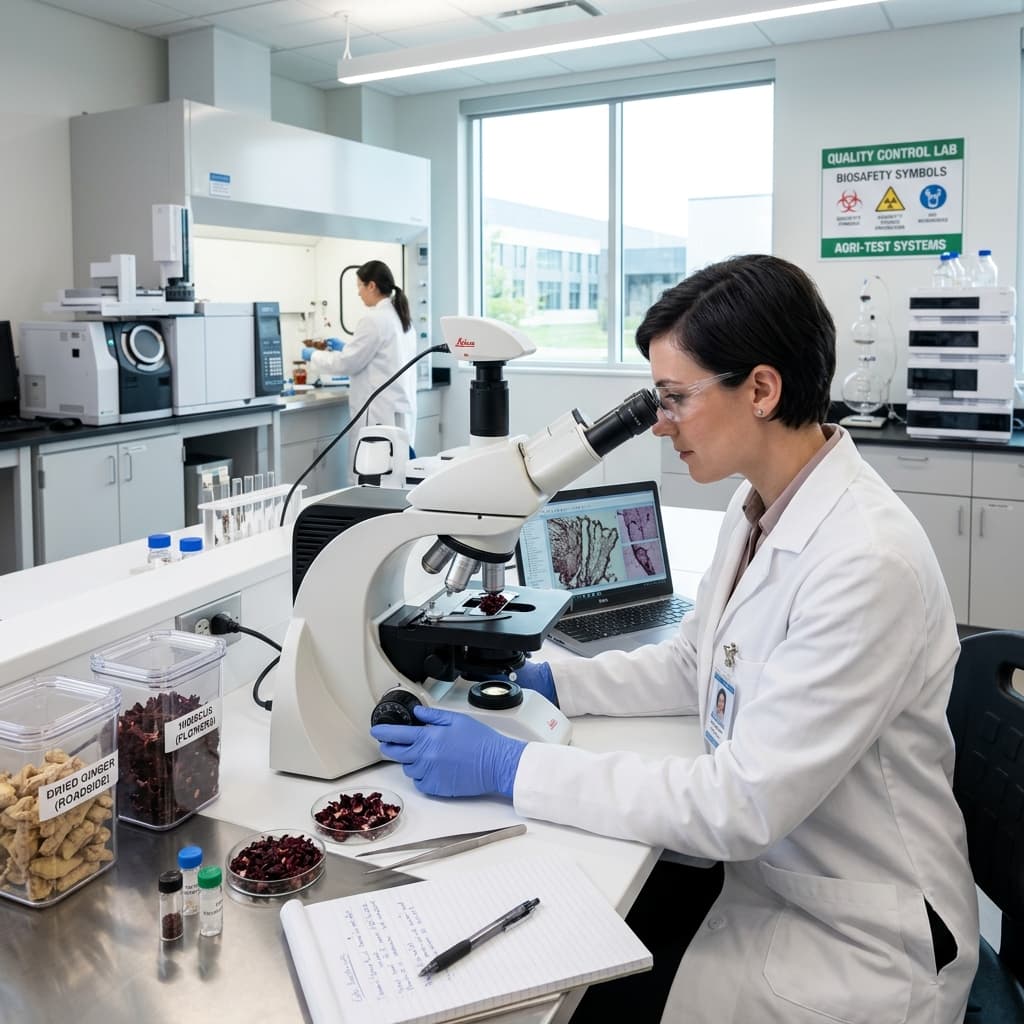
Inspection Readiness
We maintain full integration with independent surveyor organizations. Prior to loading, all contracted container holds are open to chemical, biological, and physical weight audits by SGS, Bureau Veritas, or Cotecna.
Pre-Shipment Quality Flow
Cargo Arrival
Crops arrive at Lagos terminal, consolidated in woven PP sacks.
Sampling Check
Random bags are opened for laboratory hygrometer moisture and purity checks.
Stuffing Audit
Containers are lined with moisture-barrier kraft paper and stuffed under supervision.
Inspector Survey
SGS/Cotecna takes composite samples directly from container thresholds.
Security Sealing
Container doors are locked, secured with mechanical bolts, and loaded.
Require Specific grading Thresholds?
Importers often require unique quality variables (e.g. organic-only certifications or special bag weights). Connect with our technical export desk to draft a custom purchase specification agreement.